Who we are: science, innovation and commitment to health
At Pronacera we drive the future of medicine through the development of genetic diagnostic tools and advanced biotechnological treatments. Our mission is to optimise healthcare systems by offering solutions in faster and more accurate diagnostics in areas such as assisted reproduction, nutrition, fibromyalgia and general health.
With a strong focus on R&D+i, we lead two main lines:
- Reproductive genetics, studying female fertility through molecular analysis of the endometrium.
- Gut microbiome, investigating the composition and microbial activity and its impact on digestive health.
At Pronacera, we combine science, innovation and commitment to transform diagnosis and improve people's lives.

Experience in the sector
We adapt experience to offer you solutions that make a difference.

Highly qualified team
Each one, bringing their unique experience, allows us to generate significant advances.
High-quality laboratory
We have state-of-the-art technology to drive science .

Accurate results
Each study is backed by our commitment to adapt to you .
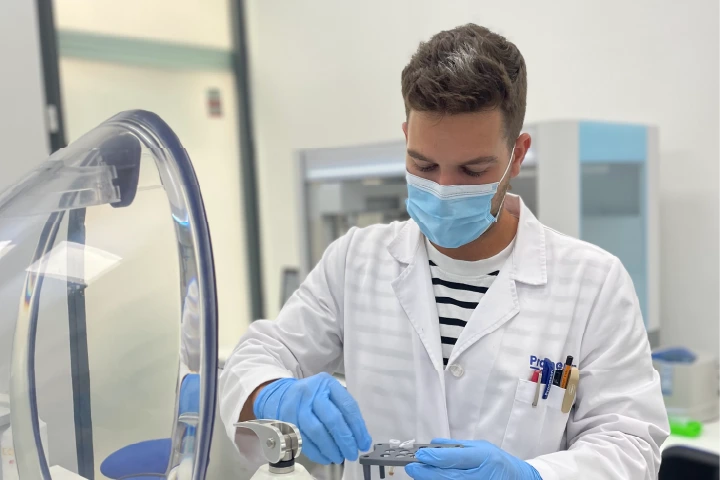


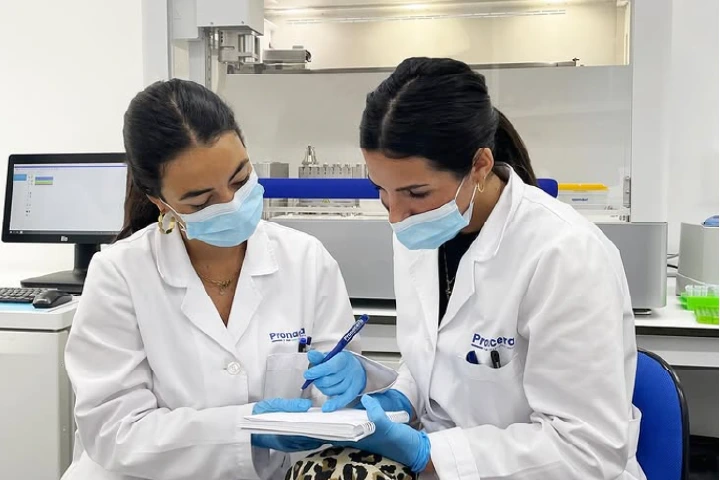
At Pronacera, we promote well-being and medical advancement through genomic research, focusing on overcoming diagnostic challenges and improving people's health.
Our Genomic Innovation Services
Our services are designed to transform the way we understand and treat diseases.
We offer advanced genetic analysis in areas such as reproductive genomics, the study of the gut microbiome, and the early identification of rare diseases.
With the most advanced genetic technology, our diagnostics enable healthcare professionals to make more informed decisions and provide more precise treatments to patients.
.
Reproductive
Health
General
Health
Fibromyalgia
Service of
Nutrition
Partners who share our vision
We collaborate with institutions and companies from Spain, Peru, Mexico, Chile, Colombia, Argentina, and other Latin American countries to advance together in the development of precision medicine. These alliances strengthen our scientific work and allow us to adapt our solutions to different clinical environments.